Highlights
- Forklifts should receive a safety examination at least daily before being placed in service, according to OSHA requirements.
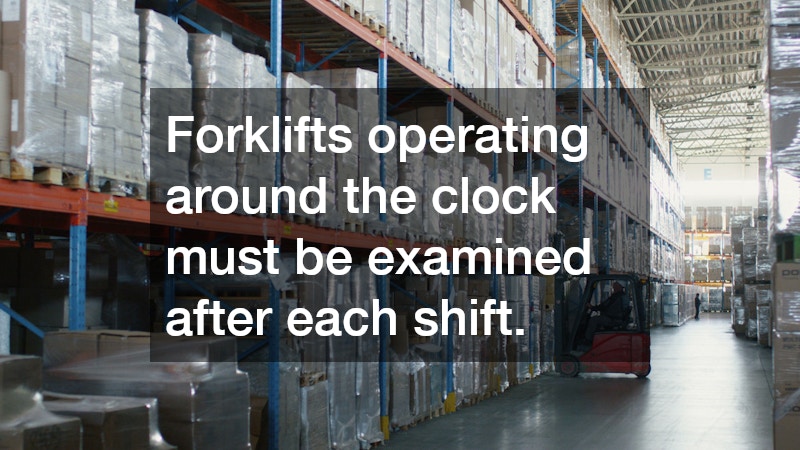
- Forklifts operating around the clock must be examined after each shift.
- Preventive maintenance schedules should follow the forklift manufacturer’s recommendations for the specific model.
- Operating hours, working conditions, load demands, and forklift type can affect how frequently professional maintenance is needed.
- Warning signs such as fluid leaks, unusual noises, steering problems, or damaged forks should prompt immediate attention rather than waiting for scheduled service.
- Keeping accurate inspection and maintenance records can help businesses identify recurring problems and plan service before equipment failures disrupt operations.
How Often Should Forklift Maintenance Be Performed?
Forklift maintenance should be performed according to the manufacturer’s recommended service schedule, while safety inspections should occur at least daily before the equipment is placed into service. There is no single professional maintenance interval that applies to every forklift because service requirements vary by manufacturer, model, operating hours, power source, and working environment.
OSHA requires powered industrial trucks to be examined at least daily and after each shift when they are used around the clock. OSHA also recommends performing preventive maintenance according to the manufacturer’s scheduled recommendations. For businesses that depend on material-handling equipment every day, a structured forklift maintenance program should therefore combine frequent operator inspections with scheduled professional service based on the equipment manufacturer’s guidance.
Why Are Daily Forklift Inspections Necessary?
Daily inspections are necessary because problems can develop between scheduled maintenance appointments and create an immediate safety concern. OSHA requires industrial trucks to be examined before they are placed in service, with inspections occurring at least daily. When equipment is used continuously across multiple shifts, it must be examined after each shift. These examinations are different from a complete preventive maintenance service. Their purpose is to identify visible or operational problems before the forklift is used. The National Institute for Occupational Safety and Health also recommends thorough daily inspections consistent with OSHA requirements. Operators should know what normal operation looks and sounds like so that leaks, damaged components, control problems, or other abnormalities can be reported promptly rather than left until the forklift’s next scheduled maintenance appointment.
What Should Be Checked Before a Forklift Is Used?
A pre-operation inspection should cover components that affect the safe operation of the forklift, with additional checks based on whether the equipment is electric, propane-powered, or uses another power source. OSHA’s forklift guidance identifies several areas that should receive attention before operation:
- Fluid levels, including oil, water, and hydraulic fluid, should be checked where applicable.
- Tires should be inspected for proper condition, pressure, cuts, gouges, and other visible damage.
- Forks, retaining pins, mast chains, hydraulic hoses, and load backrests should be examined for damage or defects.
- Safety devices, including the seat belt, should be checked to confirm that they function properly.
- Warning decals and nameplates should remain present and legible.
- Steering, brakes, hydraulic controls, and other operating systems should be checked after startup.
Any condition that could make the forklift unsafe should be reported before operation continues.
What Determines a Forklift’s Preventive Maintenance Schedule?
The manufacturer’s maintenance schedule should serve as the primary reference for determining professional service intervals. These schedules are commonly based on operating hours, elapsed time, or whichever threshold occurs first. The specific interval can vary significantly between forklift models. For example, a Toyota forklift operator manual available online specifies technical servicing at intervals including the first 250 operating hours for new trucks, followed by service milestones at 1,000, 2,000, and later operating-hour thresholds for that particular equipment. Those figures should not be applied universally to other forklifts. Equipment used for multiple shifts, heavy loads, dusty environments, extreme temperatures, or demanding applications may also require additional attention. Businesses should consult the operator or maintenance manual for each forklift rather than relying on a generic calendar-based schedule.
Which Signs Mean a Forklift Needs Maintenance Immediately?
A scheduled service date should never override an immediate safety concern. If a forklift develops a defect or shows signs that it may be unsafe, it should be evaluated before returning to normal operation. OSHA specifically requires powered industrial trucks that are not in safe operating condition to be removed from service, with repairs performed by authorized personnel. Conditions that may require prompt attention include:
- Hydraulic, fuel, coolant, or other noticeable fluid leaks.
- Damaged, cracked, bent, or excessively worn forks and related components.
- Steering or braking behavior that has changed or become unreliable.
- Unusual vibration, noises, overheating, or performance changes during operation.
- Damaged tires or wheels that could affect stability or handling.
- Problems with the mast, lift chains, hydraulic controls, or attachments.
- Malfunctioning warning devices, lights, seat belts, or other safety equipment.
Waiting for the next planned service interval is inappropriate when a defect could affect safe operation.
Why Should Forklift Maintenance Records Be Kept?
Maintenance records provide businesses with a clearer picture of each forklift’s condition and service history. Although OSHA has explained that its pre-operation examination requirement does not itself mandate use of a written checklist, employers remain responsible for ensuring that powered industrial trucks are properly examined. Internally documenting inspections, repairs, operating hours, replaced parts, and scheduled services can still be useful for fleet management. Records can reveal recurring mechanical problems, help managers determine when upcoming manufacturer-recommended service is due, and provide technicians with information about previous repairs. For operations with multiple forklifts, consistent records also make it easier to distinguish between equipment that has recently been serviced and equipment approaching a maintenance milestone. Documentation should support the maintenance program rather than replace the actual inspections and repairs needed to keep forklifts safe.
What Is the Best Approach to Forklift Maintenance?
The best approach combines daily examinations, prompt repairs, and preventive maintenance performed according to the manufacturer’s recommendations. There is no universal rule stating that every forklift must receive professional maintenance after the same number of days or operating hours. Instead, businesses should start with the manufacturer’s manual and adjust their planning around operating hours, usage intensity, working conditions, and observed equipment condition. Daily inspections remain essential: OSHA requires examinations at least daily and after each shift for forklifts operating around the clock. Most importantly, equipment showing a condition that adversely affects safety should not remain in service simply because its scheduled maintenance date has not arrived. A consistent forklift maintenance program built around inspections, manufacturer guidance, qualified repairs, and reliable recordkeeping can support safer operation while helping organizations identify equipment problems before they lead to avoidable disruption.
Sources
- Occupational Safety and Health Administration (OSHA): https://www.osha.gov/laws-regs/regulations/standardnumber/1910/1910.178
- Occupational Safety and Health Administration (OSHA): https://www.osha.gov/etools/powered-industrial-trucks/operating-forklift/pre-operation
- National Institute for Occupational Safety and Health (NIOSH): https://www.cdc.gov/niosh/docs/wp-solutions/2022-100/default.